Miyoo Mini Plus Review: Portable Retro Gaming Done Right
The Miyoo Mini Plus has quickly become one of the most recognized names in the retro handheld gaming scene. For players looking for a compact, affordable, and highly capable portable retro game console, this device stands out as a strong competitor in 2026.
Unlike modern handhelds that focus on high-end 3D performance, the Miyoo Mini Plus is built around a simple idea: bring classic gaming back in the most accessible way possible. From NES and SNES to GBA and PlayStation-era titles, it delivers a nostalgic experience in a device small enough to fit in your pocket.
For users searching for a Miyoo handheld console, this model is often the first recommendation—and for good reason.
Compact Design Built for Everyday Carry
One of the biggest advantages of the Miyoo Mini Plus is its ultra-portable design. The device is lightweight, pocket-sized, and designed for gaming on the go.
Whether you are commuting, traveling, or simply relaxing at home, this portable retro handheld console fits naturally into daily life. The ergonomic layout ensures that even longer gaming sessions remain comfortable.
This makes it especially popular among users in the US and global retro gaming communities who want a device they can carry anywhere without hassle.

3.5” IPS Display – Classic Games, Modern Clarity
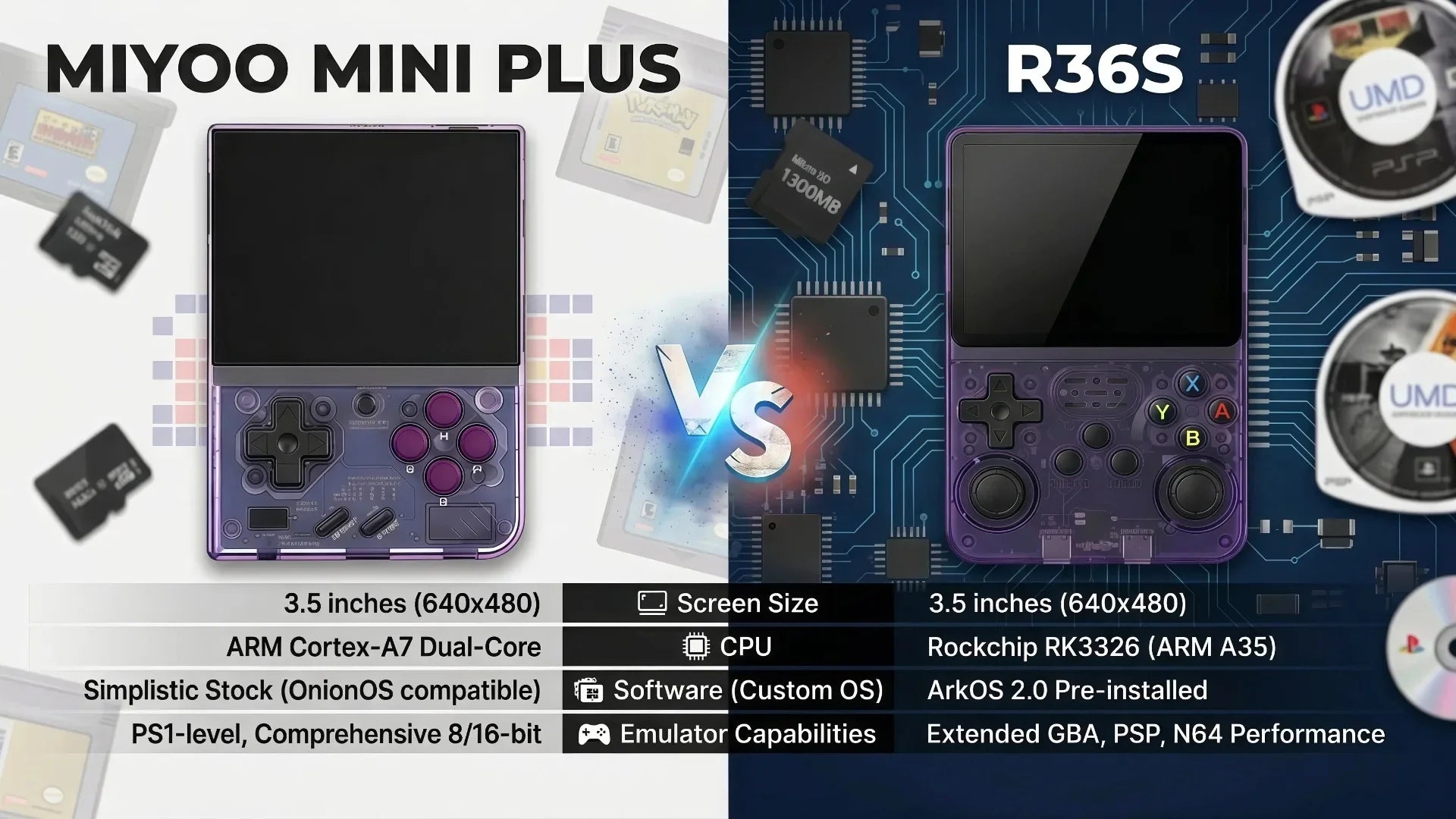
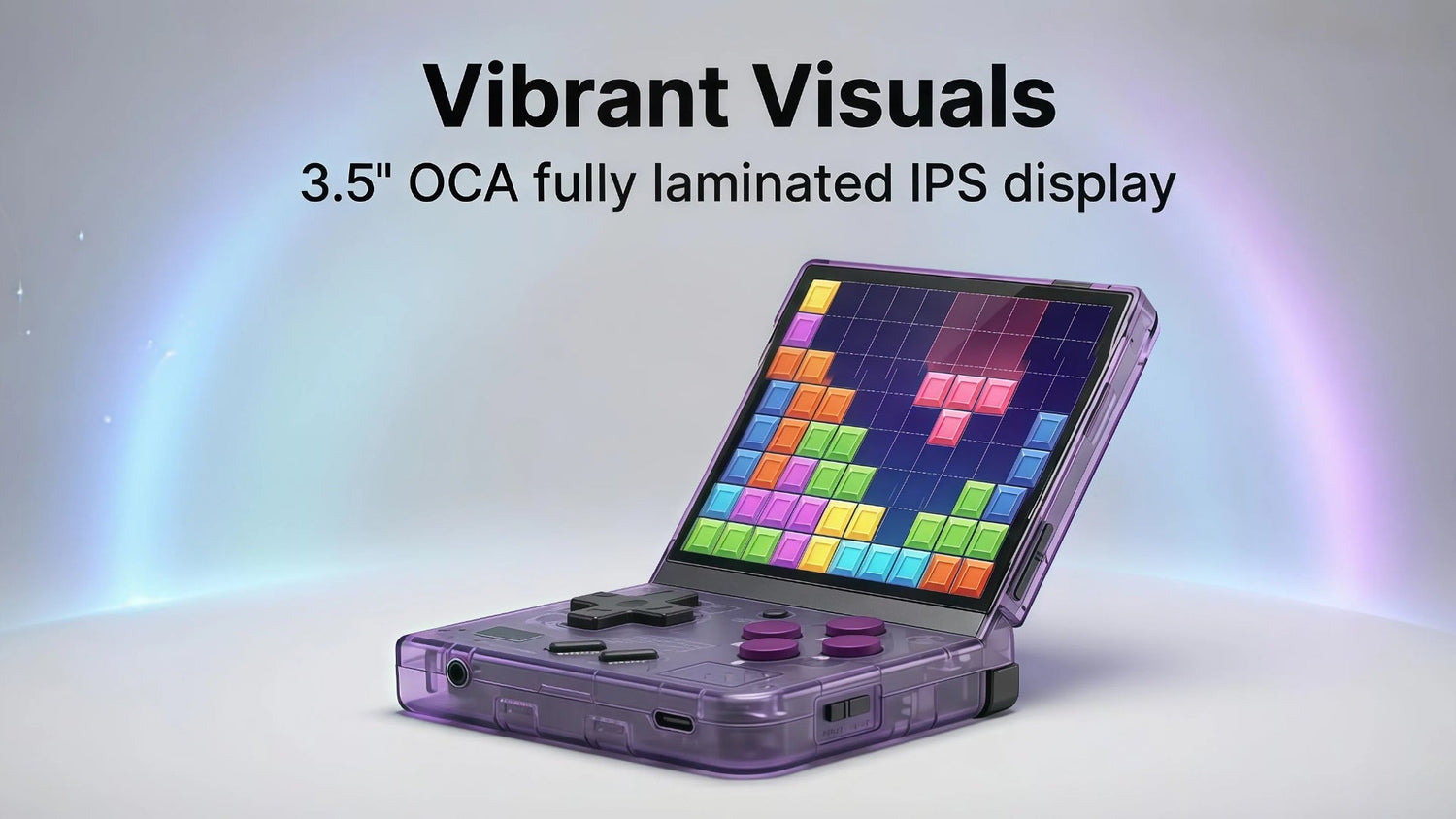
The Miyoo Mini Plus features a 3.5-inch 640×480 IPS display, which is one of the key reasons retro games look so good on this device.
Classic titles originally designed for older CRT screens are now displayed with sharp pixels, vibrant colors, and improved clarity. Games that once felt limited by hardware now feel refreshed and visually enhanced.
For a retro handheld gaming console in this price range, the screen quality is one of its strongest selling points.
Onion OS – Smooth, Flexible, and Community Driven
The Miyoo Mini Plus runs on a Linux-based system and is widely known for supporting Onion OS, a community-developed firmware that significantly improves the user experience.
With Onion OS, users gain access to:
- Faster system performance
- Better game organization
- Save/load state improvements
- Custom themes and UI enhancements
- Wider emulator compatibility
This flexibility is one reason why the Miyoo Mini Plus retro handheld has built such a loyal following. It is not a closed system—it evolves with its community.
Powerful Retro Emulation Support
At its core, the Miyoo Mini Plus is designed for emulation, and it performs this role very well for classic systems.
It supports a wide range of retro platforms, including:
- NES / Famicom
- SNES / Super Nintendo
- Game Boy / Game Boy Advance
- Sega Genesis
- PlayStation 1
Most 8-bit and 16-bit games run smoothly, making it an excellent choice for players who want a stable and reliable retro gaming handheld device.
While it is not designed for modern AAA gaming, it excels in delivering what matters most—smooth, nostalgic gameplay.
WiFi Multiplayer & Connectivity Features
A standout feature of the Miyoo Mini Plus is built-in WiFi support, which allows:
- Local multiplayer gaming
- Online connectivity for select emulators
- Firmware updates
- Easy file transfers
This adds a modern layer to a classic gaming experience. Being able to connect with friends or update your system wirelessly makes the device feel much more advanced than traditional retro consoles.
For a compact Miyoo handheld system, this level of connectivity is a major advantage.
Battery Life for Long Gaming Sessions
The device is equipped with a 3000mAh rechargeable battery, which provides up to 5–6 hours of continuous gameplay depending on brightness and usage.
This is more than enough for daily use, especially for short gaming sessions during travel or breaks.
Combined with USB-C charging, the Miyoo Mini Plus fits seamlessly into modern mobile lifestyles.
Storage Expansion for Thousands of Games
Another important feature is expandable storage via microSD card support.
This allows users to store a large library of retro games across multiple systems, turning the device into an all-in-one portable retro gaming library.
For collectors and enthusiasts, this flexibility is one of the reasons the Miyoo Mini Plus remains so popular in 2026.
Why Miyoo Mini Plus Stands Out
The retro handheld market is crowded, but the Miyoo Mini Plus continues to stand out due to a combination of factors:
- Strong price-to-performance ratio
- Highly active community support
- Excellent portability
- Stable retro emulation
- Custom firmware ecosystem (Onion OS)
It is not trying to be a premium console. Instead, it focuses on delivering a pure, simple, and enjoyable retro gaming experience.
For users specifically searching for Miyoo Mini Plus review, this balance is exactly why the device is often recommended over competitors.
Who Should Buy the Miyoo Mini Plus?
This device is ideal for:
- Retro gaming enthusiasts
- Collectors of handheld consoles
- Casual players who want plug-and-play gaming
- Travelers looking for portable entertainment
- Users exploring retro emulation for the first time
If your goal is to relive classic games without complexity, the Miyoo Mini Plus is one of the best entry points into the world of retro handheld gaming.
Final Thoughts
The Miyoo Mini Plus proves that great gaming experiences do not require expensive hardware or complicated setups. With its compact design, strong emulation performance, Onion OS support, and WiFi features, it delivers everything a retro gaming fan needs in one small device.
In a market full of options, it remains one of the most balanced and accessible portable retro handheld consoles available today.
For anyone searching for a reliable way to revisit classic gaming, the Miyoo Mini Plus continues to be one of the strongest choices in 2026.